

The Historical Journey of Hemp in Turkey – Part I
9/4/20252 min read
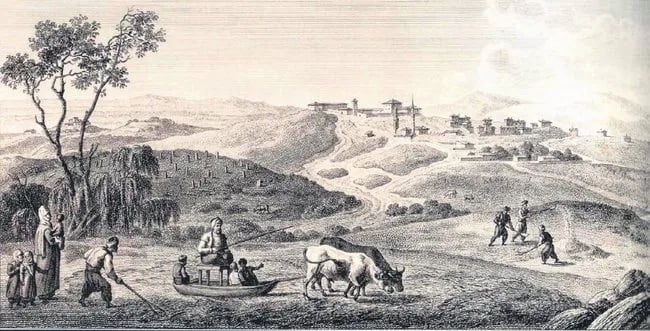
Hemp is one of the most significant crops that Anatolia has cultivated and processed for thousands of years. Thanks to its dual use for both fiber and seed, hemp found its place in nearly every aspect of life—from daily household needs to military logistics, from industry to the kitchen. To truly understand the renewed interest in hemp cultivation today, it is essential to look back at its historical journey. For hemp’s story from the Ottoman Empire to the Republic of Turkey is not only an agricultural narrative, but also a reflection of the nation’s economic, social, and technological transformation.
During the Ottoman era, hemp was far more than an ordinary crop—it was a strategic raw material, particularly for the navy. Ropes, sails, sacks, and rigging were all produced from hemp fiber, whose durability ensured the safety of ships on long sea voyages. Oil extracted from hemp seeds was used both as a cooking ingredient and in the production of soap, varnish, and paint. The Black Sea provinces led hemp production: Kastamonu, Sinop, Samsun, Ordu, and Amasya were the best-known centers. Cultivation also took place in Marmara and Central Anatolia, while in humid regions such as Rize, finer and higher-quality fabrics were produced. Shipyards like the Imperial Arsenal in Istanbul and the Sinop dockyard purchased thousands of tons of hemp yarn and sailcloth each year, keeping production vibrant. This steady demand stimulated cultivation in coastal villages. Legally, industrial hemp was never banned in the Ottoman Empire; edicts in the 18th century restricted only cannabis consumption. Thus, hemp remained a freely cultivated and state-supported crop, essential to the empire’s needs.
With the proclamation of the Republic, hemp became central to Turkey’s goals of agricultural development and industrialization. The new state introduced policies to strengthen the rural economy and meet industrial demand with domestic resources. Seed-breeding stations established in 1933 aimed to improve the yield and fiber quality of local hemp varieties. Ziraat Bank provided farmers with low-interest loans to support production, while the Ministry of Agriculture distributed seeds and offered purchase guarantees, reducing risks for producers. This allowed farmers to cultivate hemp with confidence, knowing their harvest would always find a buyer.
In this period, the Black Sea region remained the heart of hemp production. Samsun, Kastamonu, and Sinop supplied raw materials for sack factories and rope workshops. The needs of the fiber industry were largely met through domestic production, making hemp a cornerstone of Turkey’s early industrial growth. The 1933 Law No. 2313 on the Control of Narcotic Substances prohibited cultivation for narcotic use but explicitly exempted industrial hemp for fiber and seed, providing it with strong legal protection as a strategic crop.
For many years, traditional methods dominated hemp cultivation. Seeds were mostly sown by hand or with simple agricultural tools, while harvesting was done with sickles and scythes. Stalks were soaked in water to separate the fibers, then beaten and combed to produce durable textiles. With the onset of mechanization in agriculture during the 1950s, partial use of machines was gradually introduced in some regions.
Throughout the first four decades of the Republic, hemp played a dual role: supporting rural development while supplying industry with vital raw materials. This historical experience now serves as one of the strongest references in today’s discussions on reviving hemp cultivation. In the past, hemp provided farmers with income, fueled industrial growth, and reduced the country’s dependence on imports—an outcome still highly relevant to Turkey’s future.